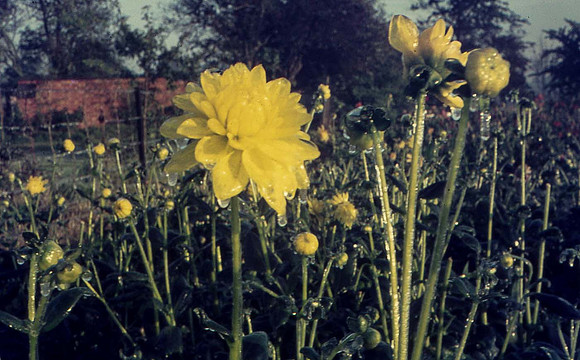
These dahlia flowers and stalks are covered in ice. In an attempt to extend the flowering season, we would switch on irrigation pumps and sprinklers for perhaps the first one or two autumn frosts, which would generally occur in early to mid November. The system would be started in the night as the temperature dropped, and as near to the point of frost beggining. This meant checking the temperature periodically through the night. As the water sprayed over the delicate foliage, it would freese, then when the sprinkler rotated, another layer of water would cover the previous layer of ice, and start to freese. This process would keep the foliage of the plants at just above freesing point, as the water gave up its heat in order to turn to ice. This process would only work for short amounts of time, as the water supply was limited, and if the wieght of ice became too great, the plants would collapse. This process was occasionally used in apple orchards at the beginning of the year to protect the blossom from late spring frosts.